Expert assessment and pessary fitting for vaginal prolapse in Aberdeen, helping to relieve symptoms such as pelvic pressure, discomfort, bladder issues, and the sensation of a vaginal "bulge" without the need for surgery.
Our experienced women's health GPs provide comprehensive prolapse assessment, ring pessary fitting, routine pessary care, and ongoing support. Following an examination, we can often fit a pessary during the same appointment, helping you return to everyday activities with greater comfort and confidence. Specialist referral can be arranged where more complex prolapse requires alternative treatment options.
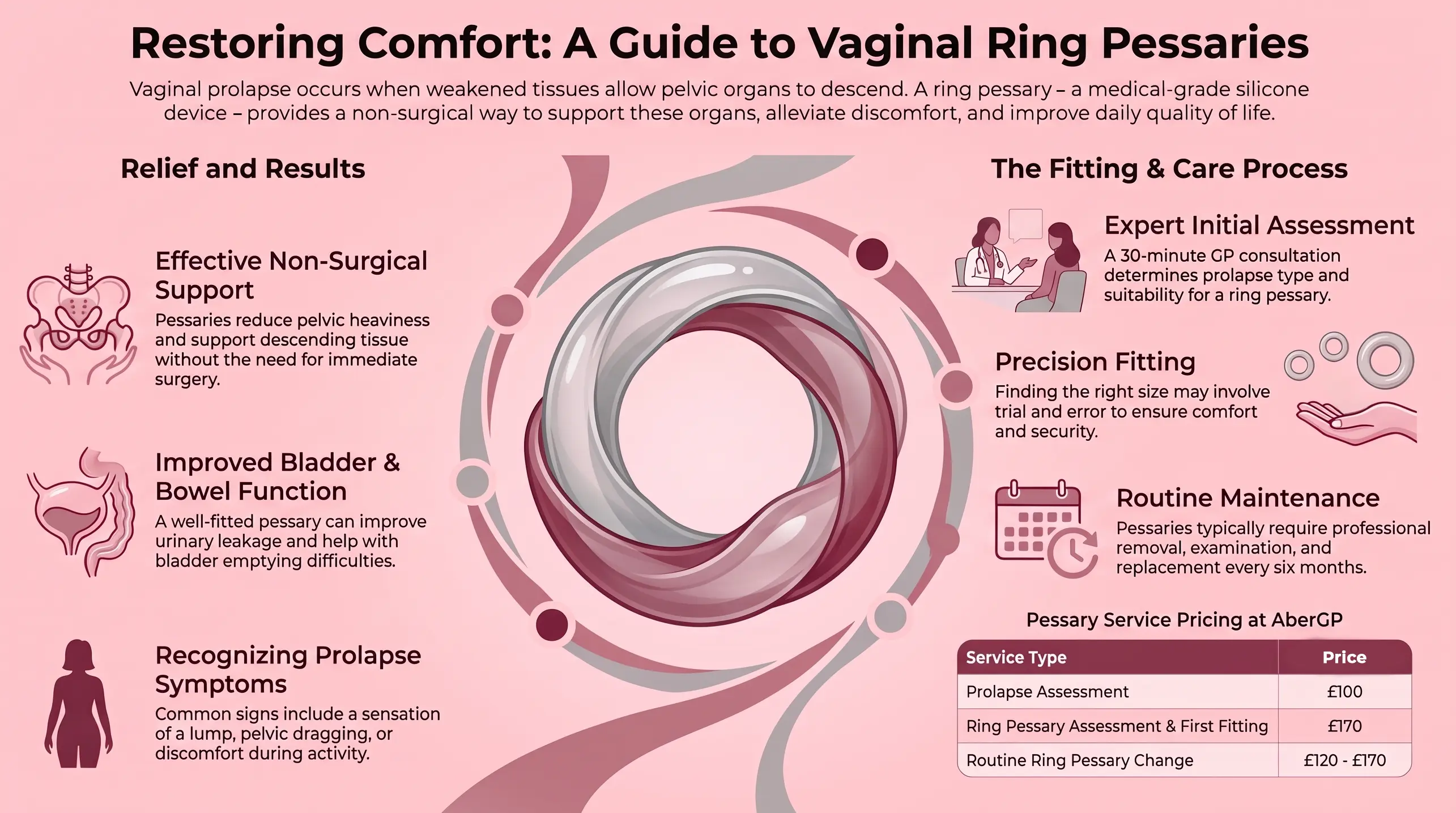
What is a Vaginal Prolapse?
A vaginal prolapse is a common condition in which one or more of the structures supporting the vagina become weakened, allowing the bladder, bowel or uterus to descend towards or into the vaginal canal.
Prolapse is particularly common after childbirth and around and after menopause, when changes in the pelvic floor, connective tissues and vaginal tissues can contribute to reduced support. Prolapse can range from mild symptoms to more significant descent, where tissue may protrude outside the vaginal opening.
Symptoms can include:
- A feeling of heaviness, dragging or pressure in the pelvis
- A sensation of a lump or something coming down
- Vaginal or vulval discomfort or irritation
- Discomfort during activity or exercise
- Difficulty emptying the bladder or bowel
- Urinary leakage or other changes in bladder function
- Bowel symptoms, including difficulty with bowel emptying
For some women, a pessary can provide effective support and significantly improve symptoms without the need for surgery.
What is a Vaginal Ring Pessary?
A ring pessary is a soft but firm medical device, usually made from medical-grade silicone, which is inserted into the vagina to provide support to the vaginal walls and pelvic organs.
A ring pessary is particularly useful for supporting a bladder prolapse (anterior vaginal wall prolapse). Once correctly fitted, most women are not aware that the pessary is in place.
There are several different types of pessary available. Ring pessaries are suitable for many women, but not every type or severity of prolapse can be managed with a ring pessary.
More complex prolapses, including some uterine or posterior vaginal wall prolapses, may require a different type of pessary or specialist gynaecological assessment. Where appropriate, we can arrange referral to a specialist service.
How Can a Pessary Help?
A well-fitted pessary can:
- Reduce the sensation of vaginal pressure or heaviness
- Support a prolapse and reduce the amount of tissue descending into the vagina
- Improve bladder symptoms associated with prolapse
- Reduce discomfort and improve day-to-day quality of life
- Allow women to remain active and comfortable without immediately considering surgery
Some women also find that supporting a bladder prolapse improves urinary leakage and makes them feel more comfortable and confident with their personal hygiene.
Initial Prolapse Assessment Appointment
If you think you may have a vaginal prolapse, we recommend an initial 30-minute consultation with one of our experienced GPs (see which GPs provide this service below).
During this appointment, we will discuss your symptoms and medical history and perform an internal examination to establish:
- Whether a prolapse is present
- The type and severity of prolapse
- Whether a ring pessary is likely to be suitable
- Allow women to remain active and comfortable without immediately considering surgery
If a ring pessary is considered appropriate and we have a suitable size available, it may be possible to fit it during the same appointment.
Finding the Right Size
Pessaries come in different sizes and, occasionally, finding the right fit can involve some trial and error.
We may need to try two or three different sizes to find the pessary that is comfortable and remains securely in position. Occasionally, a ring pessary may not remain in place. If a suitable pessary cannot be retained, we can discuss referral to gynaecology for consideration of alternative pessary devices or other treatment options.
Is Pessary Fitting Painful?
Insertion is generally straightforward and carries a very low risk of complications. You may experience some mild discomfort during the examination and fitting, but once correctly positioned, most women do not feel the pessary.
Occasionally, a pessary can cause:
- Increased vaginal discharge
- Vaginal irritation
- Pressure-related irritation or ulceration of the vaginal wall
- Minor bleeding
Regular review and appropriate vaginal care can help reduce these risks. Where appropriate, vaginal oestrogen may be recommended, particularly in postmenopausal women, to support the health of the vaginal tissues.
We will discuss how to look after your pessary and when to seek advice.
Ongoing Pessary Care
If you have an established ring pessary, we can provide a routine removal, examination and replacement service.
A routine change is generally recommended every six months, although the appropriate interval can vary depending on the individual patient, the pessary used and any vaginal symptoms.
If you develop new pain, bleeding, unusual discharge, difficulty passing urine or other concerns while using a pessary, you should contact us rather than waiting for your routine appointment.
Other Types of Pessary
A ring pessary is only one type of pessary. Some prolapses require alternative devices, such as a Gellhorn pessary or other specialist pessary.
These devices can be more complex to fit and are generally managed within gynaecology. If we feel that a ring pessary is not appropriate for you, we will explain the options and, where appropriate, arrange referral to a specialist service.
Who Provides this Service at AberGP?
Our vaginal ring pessary service is provided by GPs with specific experience and training in pessary fitting and women’s health.
At AberGP, Dr Julie Gray and Dr Penny Quieros provide vaginal ring pessary fitting, removal and changeover services.

Dr Julie Gray
General Practitioner

Dr Penny Quieros
General Practitioner
Prices
Fee per procedure (excludes consultation fee)
Vaginal (Ring) Pessary
Insertion and change price includes cost of device
Prolapse Assessment (30 minutes)
£100
Ring Pessary - Assessment and First Fitting
£170
Ring Pessary - Removal
£50
Ring Pessary - Routine Change (Non-Complex)
£120
Ring Pessary - Routine Change (Complex)
£170
Routine change recommended every 6 months
Prolapse Assessment – £100
A 30-minute GP consultation including discussion of your symptoms and an internal examination to assess for prolapse and determine whether a pessary may be suitable.
Ring Pessary Assessment and First Fitting – £170
Where a ring pessary is considered appropriate, this appointment includes fitting of the pessary and the cost of the device. Where possible, the pessary can be fitted during the initial assessment appointment.
Routine Ring Pessary Change – £120 to £170
A 15-minute appointment for removal, examination and replacement of an established ring pessary. The cost of the replacement device is included. Complicated cases may require a 30-minute appointment at an additional cost.
Ring Pessary Removal – £50
Removal of an established ring pessary where no replacement is required.
Please note that more complex prolapse, symptoms requiring further investigation, or conditions requiring specialist assessment may require additional consultation or referral.
Ready to Take the Next Step?
If you're experiencing symptoms of vaginal prolapse, a vaginal ring pessary may provide effective, non-surgical relief and help you return to everyday activities with greater comfort and confidence.
Our experienced women's health GPs in Aberdeen offer expert assessment, pessary fitting, routine reviews, and ongoing support tailored to your individual needs. Whether you're seeking a diagnosis, considering a pessary for the first time, or require routine pessary care, we're here to help.
Book a Vaginal Prolapse Assessment at AberGP today to discuss your symptoms, explore your treatment options, and find out whether a vaginal ring pessary is right for you. Contact our Aberdeen clinic to arrange an appointment.






.webp)